A Laundry Room That Works
Most laundry rooms fail because they are organized around appliances rather than around the four jobs that happen there. Here is a layout that survives a real week.
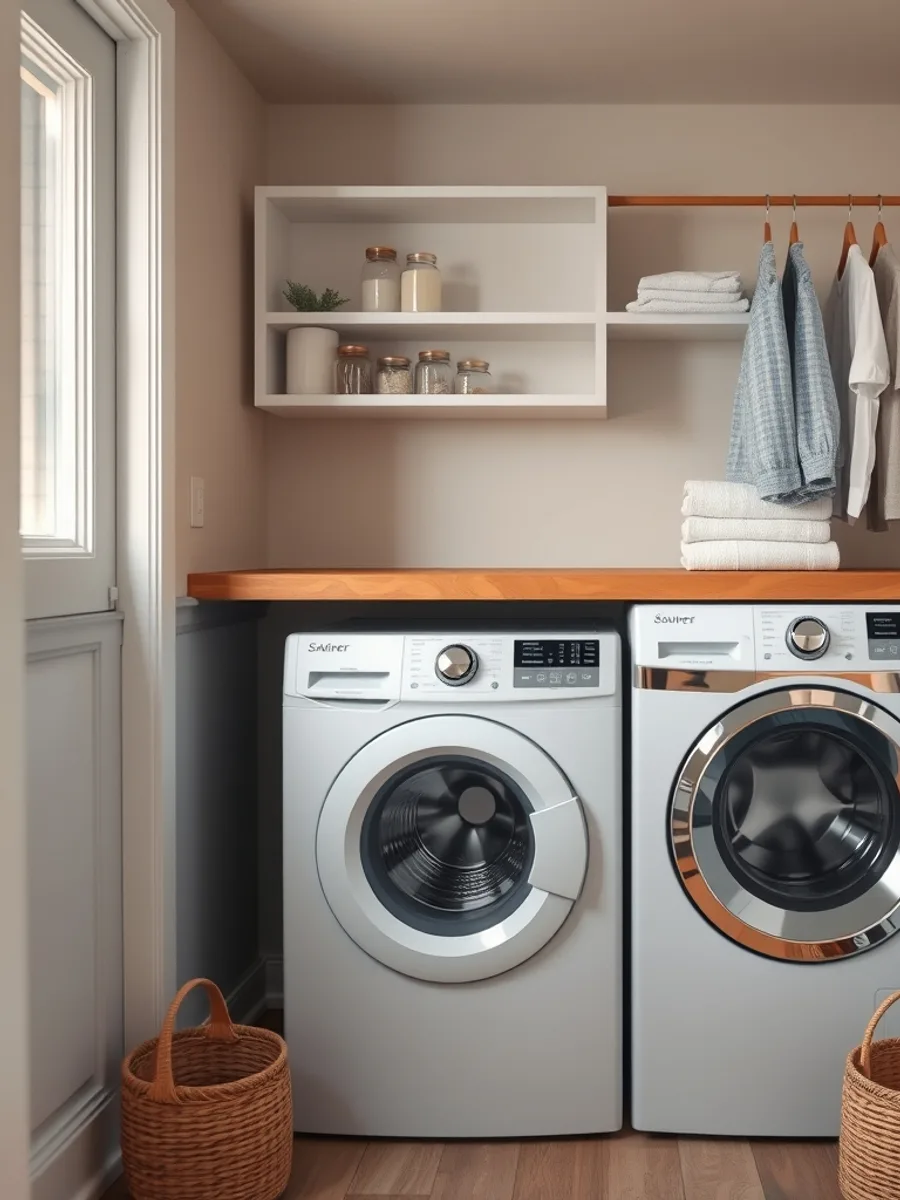
Laundry rooms usually get organized around the machines, which is backwards. The machines are fixed; the work around them is what jams. Sort here, wash there, dry somewhere, fold on whatever surface is free. Plan those four jobs and the room stops being a hallway with appliances in it.
This post contains affiliate links. If you buy through them, we may earn a commission at no extra cost to you. Read our Affiliate Disclosure.
Map the four jobs before buying anything
Walk through a load in your head and mark where each step happens. Sorting needs floor space or a sorter with three compartments. Loading needs clearance in front of the door, ideally 36 inches so the door opens fully and you can kneel. Drying needs either a vented machine, a rack, or a line. Folding needs a flat surface at roughly counter height, which is the single most useful thing you can add to a laundry room.
The order of operations
The sequence most households run is: collect, sort, wash, dry, fold, put away. Put-away is the step that fails, because folded laundry sits in a basket in the hall for three days. Give it a landing spot inside the room, such as one shelf at hip height, and it becomes a ten-second job instead of a trip.
Measure the room, including door swings, before you buy shelving. A 36-inch aisle is comfortable; 30 inches works if you are the only person using the room. The dead space above the machines is where shelves belong.
Sort without a pile on the floor
A three-bag sorter is not a luxury in a household of four; it is the difference between a system and a heap. Look for a frame that holds the bags open, canvas or mesh bags rather than thin nylon, and a footprint shallow enough to fit beside the machine rather than in front of it. A three-section laundry sorter with removable bags lets you carry one bag to the machine instead of hauling the whole frame.
Keep a small mesh bag clipped to the sorter for socks and delicates, and wash it with the load. Bras, masks, and anything with a hook go in there. A set of zippered mesh laundry bags does the same job for a few dollars and saves a season of stretched straps.
Solve drying for the loads you actually have
Not everything should go in the dryer. Wool, linen, anything with elastane, and most activewear last longer on a rack, and a dryer that runs less is a dryer whose vent stays cleaner. The trade-off is space.
| Product | Best for | What to know |
|---|---|---|
| Folding drying rack | Delicates, sweaters, one or two loads a week | Folds flat but needs floor space while open; check the bar spacing so knits do not stretch |
| Retractable line | Small rooms and blank walls | Mounts to the wall and disappears when not in use; the anchors matter more than the line |
| Ceiling-mounted rack | Rooms with height and no floor space | Raises and lowers on a pulley; needs solid ceiling fixing and about 10 inches of clearance |
| Vented dryer | Towels, bedding, everyday cotton | Fastest, but the duct needs cleaning yearly and flexible foil duct collects lint |
Whichever you choose, ventilate. A dryer pushed against a kinked duct works harder and takes longer, and lint in a sagging duct is a fire risk. Use rigid or semi-rigid metal duct where you can, keep the run short, and clean the whole length once a year. Empty the lint screen every load.
Deal with damp air and the smell
Front-loading washers trap moisture in the door gasket. Wipe the gasket dry once a week and leave the door ajar between loads; that single habit prevents most of the mildew smell people blame on the machine. Clean the detergent drawer monthly, because residue there feeds the same smell.
If the room has no window, run the dryer with the door closed and the vent connected properly, and consider a small dehumidifier if towels still feel clammy. Never vent a dryer into the room. The moisture has to go somewhere, and it will find the walls.
Overdosing detergent is the other quiet cause of smelly laundry. High-efficiency machines need very little; a couple of tablespoons is often enough for a normal load, and manufacturers list the dose on the bottle. More soap means more residue in the drum and in the fibers.
Hang, fold, and store within reach
A rod above the counter, at shoulder height, gives shirts that need two minutes on a hanger somewhere to go. A wall-mounted folding drying rack over the counter does similar work for small items without eating floor space.
For supplies, keep out what you use weekly and hide the rest. A set of stackable clear storage bins on the top shelf handles the spare bottles, light bulbs, and the sewing kit. Keep detergent pods in a closed container well above a child's reach and never in an open basket; they are the one laundry product worth being strict about.
If the room doubles as a pantry or a mudroom, the same zoning logic applies. Our guide to pantry organization systems covers shelf depths and clear containers, and storage baskets that keep their shape are the honest answer for anything that has to look decent on an open shelf.
Small rooms, shared rooms, and rentals
A closet laundry needs vertical thinking: stack the machines if the models allow it, put a narrow shelf above the door, and hang the ironing board on the back of it rather than buying a freestanding one. In a rental, choose tension-mounted pieces over anything that needs drilling.
Finally, put something under the washer. A drip pan or a rubber mat costs little and contains the slow leak that otherwise shows up as a stain on the ceiling below. Check the pan is actually plumbed or emptied; a pan that fills and overflows is worse than none.
FAQ
Does a laundry room need a floor drain?
Older utility rooms often have one, but most homes do not. If yours does not, a washing machine pan with a drain hose routed outdoors is the practical substitute, checked once a year.
How often should the dryer vent be cleaned?
Once a year for a typical household, and twice if you dry several loads a week or have a long duct run. Clean the lint screen every load, and check the outside flap opens freely. If clothes take noticeably longer than they used to, inspect the duct first.
Can I put shelves directly above a washer and dryer?
Yes, if you leave enough clearance for the lids and the hoses. Top-loaders need their full lid height plus a few inches; front-loaders need room for the door and for you to reach the detergent drawer. Keep the lowest shelf a foot above the appliance and fix it into studs, not drywall anchors, because detergent bottles are heavy.