Robot Vacuums for Homes With Pets: What Actually Matters
Pet hair breaks robot vacuums in specific places: the brush roll, the filter, and the schedule. Here is what to check before paying for features you will not use.
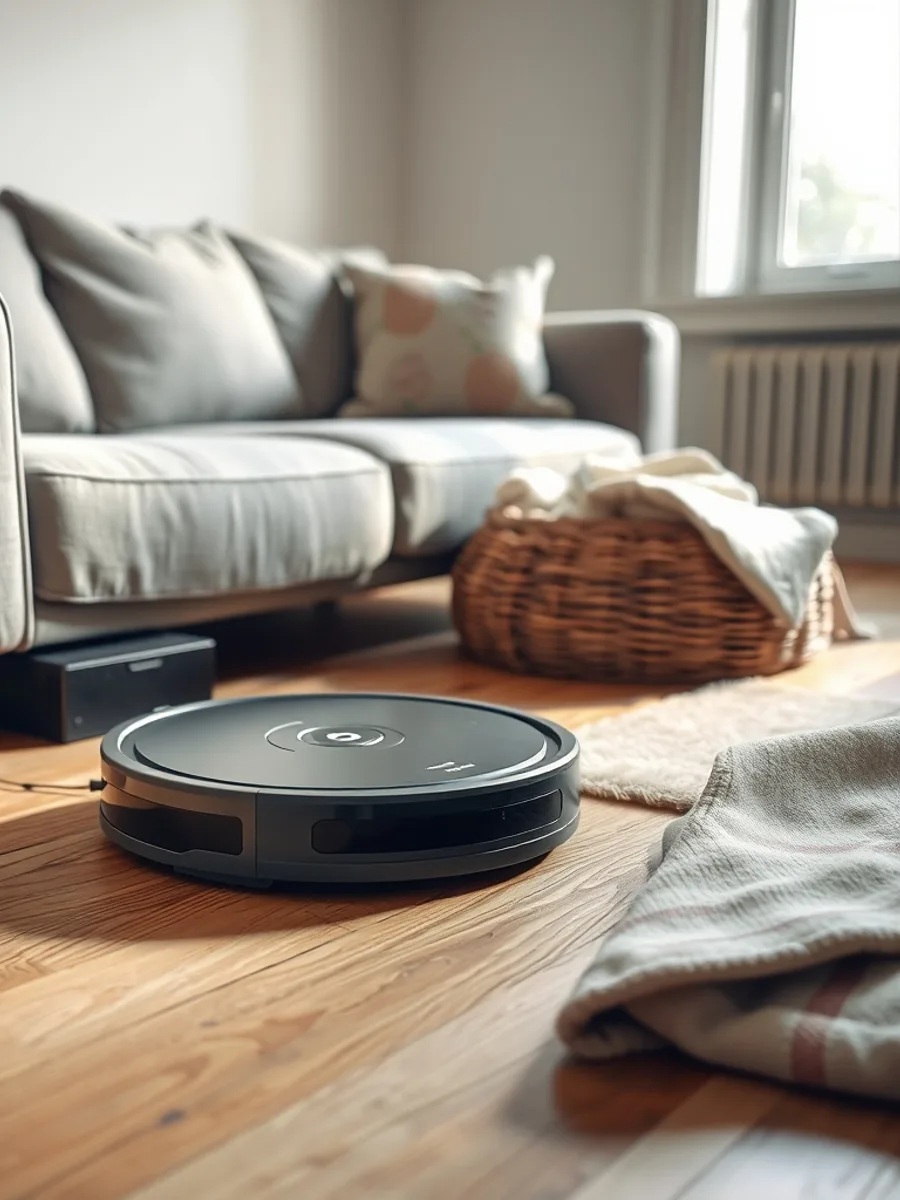
Pet hair is not just more dirt. It wraps around brush rolls, clogs filters faster than dust does, and collects in the exact places a robot struggles to reach — under the sofa, along the skirting, in the corners where a dog sleeps. That is why the useful questions about a robot vacuum for a pet household are about maintenance and navigation, not about the biggest number on the box.
This post contains affiliate links. If you buy through them, we may earn a commission at no extra cost to you. Read our Affiliate Disclosure.
The brush roll decides your weekends
Long hair and pet fur wrap around a bristle brush in a tight spiral that has to be cut off with scissors. Rubber brush rolls, sometimes called extractors, resist wrapping because the hair slides to the ends rather than winding around the axle. If your household has one long-haired person and one shedding dog, this single feature matters more than suction.
Look for a roll that can be removed without tools. You will be cleaning it every week or two, and a roll held in by two screws and a hidden clip will make you stop doing it.
Also check the front caster and the side brush. Hair collects around the caster axle and eventually stops it turning, which makes the robot drag or lose its path. A caster that pops out for cleaning is a small design decision that saves a lot of annoyance.
Suction, airflow, and the floor you actually have
Pascal ratings are the headline number and the least comparable across brands, because there is no shared test standard. What moves pet hair is airflow through a sealed path, and a machine with a good seal and a clean filter will outperform a higher-rated one with a clogged filter.
On carpet, the brush roll does most of the work: it agitates the pile and lifts the hair so airflow can carry it away. On hard floors, airflow and a wide intake matter more than agitation, and a spinning brush can scatter debris rather than collect it.
If you have both surfaces, check that the robot can detect the difference and raise or lower the brush automatically. That is a real convenience, not a gimmick, because a lowered brush on a rug can tangle in fringe.
Navigation is a pet-safety feature
A robot that bumps its way around the room will find the water bowl, the food bowl, and — eventually — the accident. Mapping models build a floor plan and let you draw no-go zones around bowls, crates, and the corner where the puppy sleeps.
Camera-based navigation needs light to work and raises an obvious privacy question. Lidar navigation works in the dark and does not capture images. Neither is automatically better, but in a house where the robot runs at night, lidar is the more predictable choice.
Scheduling is where most pet households get into trouble. Run the robot when the pet is not in the room, and never schedule a run immediately after a meal or a walk. A robot that meets a pet accident will spread it across the floor and into the brush, which is a much worse afternoon than vacuuming manually.
The dock, the bag, and the maintenance interval
Self-emptying docks are genuinely useful in a pet house, because the onboard bin fills quickly with hair. The dock's bag or canister is the real capacity: manufacturers typically state 30 to 60 days per bag, and a heavy-shedding dog can halve that. Check the cost and availability of the bags before buying, because a dock with expensive proprietary bags becomes a subscription.
| Product | Best for | What to know |
|---|---|---|
| Robot with a rubber brush roll | Long hair and heavy shedding | Check the roll is tool-free to remove and the caster pops out |
| Self-emptying model with a bag | Daily pet-hair runs | Confirm bag cost and availability before buying |
| Lidar-mapped robot | Night schedules and no-go zones | Works in the dark; no camera images |
| Camera-navigation robot | Cluttered rooms with obstacles | Needs light; check how the footage is stored |
| Robot mop combo | Hard floors with light pet traffic | Wet mopping and pet accidents do not mix well |
For a home with a shedding dog, a robot vacuum with a rubber brush roll is the place to start, and a self-emptying model with a sealed bag reduces how often you think about it. Keep replacement filters on hand rather than ordering them in a panic, and if you also have rugs, a model with automatic carpet boost saves fiddling with settings.
Before you let it run
Clear the floor of cables, socks, and pet toys. A robot will swallow a charging cable and stop, or drag a toy into the dock and jam it. Check the thresholds between rooms: most robots climb about half an inch to three-quarters, and a raised trim strip can strand the machine in one room.
Let the pet meet the robot while it is switched off. Most animals adjust within a week if the first encounters are calm and the machine is not chasing them. A nervous cat may never accept it, which is worth knowing before you buy a model with a loud dock cycle.
For the hair that ends up on the sofa rather than the floor, our guide to upholstery cleaning basics covers the brush and vacuum attachments that actually lift it. If your model also mops, check the floor finish first: cleaning wood furniture explains which sealed surfaces tolerate water and which do not.
Filters and the weekly routine
Filters are the recurring cost that catches people out. Most robots use a washable mesh pre-filter and a pleated or HEPA filter behind it. Rinse the mesh monthly and let it dry completely; replace the pleated filter every six to twelve months in a pet household, more often if anyone has allergies. Cleaning the brush roll weekly matters as much as changing the filter, and both jobs take less time than untangling a corded vacuum.
FAQ
Do robot vacuums work on pet hair in carpet?
They lift surface hair well on low-pile carpet, especially with a brush roll. On deep pile, the brush tends to ride on top of the fibers and the robot may need several passes. A corded upright will still do a deeper clean once a month.
How often should I clean a robot vacuum with a dog?
Empty the bin after every run, clean the brush roll weekly, and rinse the mesh filter monthly. With a heavy-shedding dog, check the caster and side brush every week as well; hair wraps there faster than anywhere else on the machine.
Are robot vacuums safe around pets?
Generally yes, and most pets ignore them within a few days. The risks are practical: a startled pet can knock the dock, and a robot can run into a pet that is sleeping. Use no-go zones and schedule runs when the animal is elsewhere in the house.