Upholstery Cleaning Basics for Real Homes
A sofa is mostly air and fiber, and both hold onto whatever lands on them. The code on the cushion tag decides what you can safely use, and most damage starts with ignoring it.
Upholstery is forgiving until it gets wet, and then it becomes the most expensive thing in the room. The difference between a sofa that lasts fifteen years and one that looks tired at five is mostly vacuuming, blotting, and knowing which liquids the fabric will tolerate.
This post contains affiliate links. If you buy through them, we may earn a commission at no extra cost to you. Read our Affiliate Disclosure.
Find the cleaning code before anything else
Most upholstery carries a small tag under a seat cushion or on the frame. It uses a four-letter code, and it tells you what the fabric can survive.
- W means water-based cleaner is fine.
- S means solvent-based cleaner only, usually dry clean. Water can leave rings and shrink the backing.
- WS means either will work.
- X means vacuum only, no liquid at all.
If the tag is missing, treat the piece as S until you know better, and test any product on a hidden patch: the back of a skirt, the underside of a cushion. Wait a full day before judging, because some fabrics look fine wet and ring as they dry.
What the code does not tell you
The code covers the fiber, not the filling or the frame. A W-coded cover over a foam seat still should not be soaked, because water that reaches the foam takes days to dry and can leave a smell that never quite leaves. Clean the surface, not the cushion. Newer performance fabrics are a separate case: many are treated with a finish that repels liquid, and a harsh cleaner or a stiff brush strips that finish faster than wear does.
Vacuum more than you clean
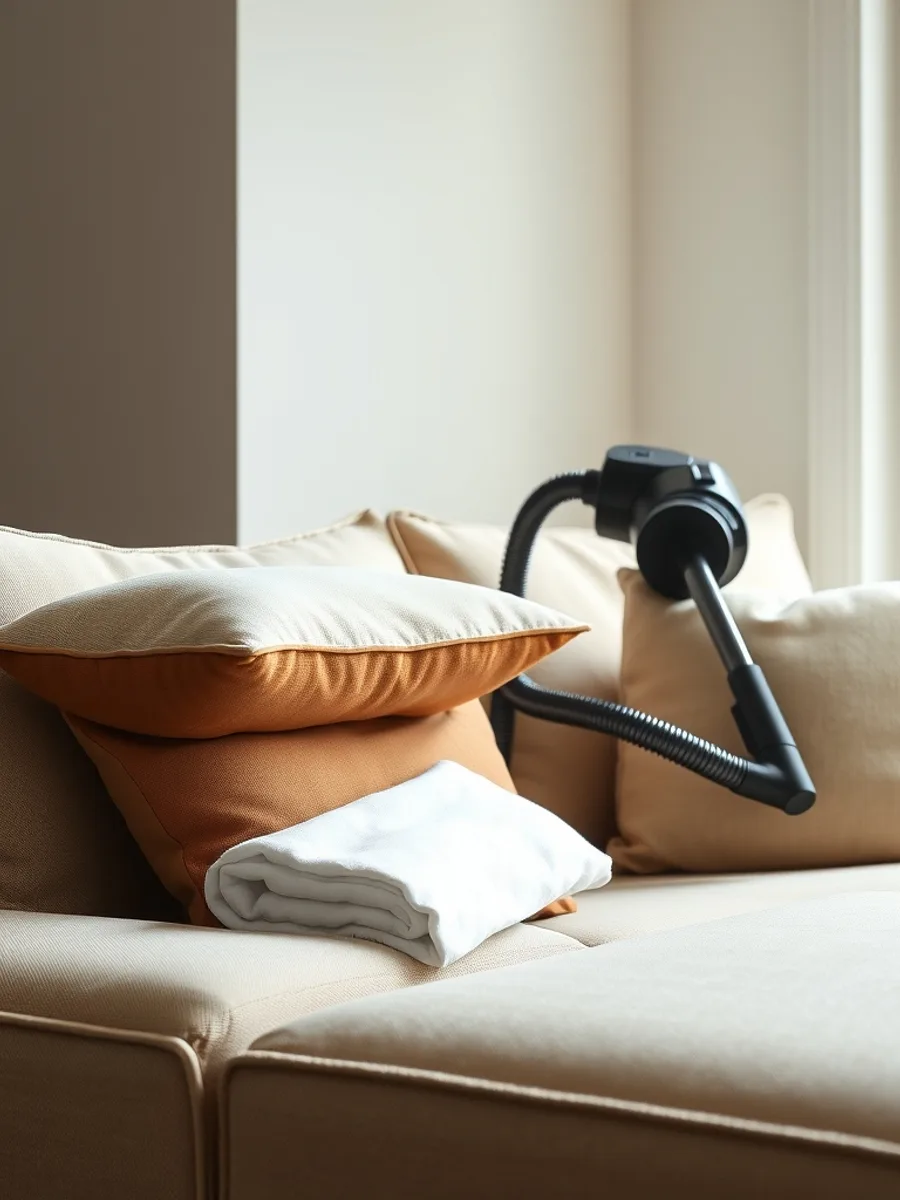
Most of what ages a sofa is grit. Dust and sand work into the weave and abrade the fibers every time someone sits down, which is why the arms and the front edge of the seat go first. Vacuum weekly with an upholstery attachment, using low suction and no rotating brush, and get into the creases where crumbs collect.
A vacuum upholstery attachment with a soft brush makes this a two-minute job rather than a chore. Do the seams with a crevice tool, then the cushions on both sides. Flip and rotate the cushions monthly so they wear evenly, and keep the sofa out of direct sun, which fades one arm and not the other.
Spills: blot, do not rub
Act in the first minute. Scoop up solids with a spoon, then blot with a white cloth, working from the outside of the stain inward so you do not spread it. Press and lift; rubbing pushes the stain into the filling and fuzzes the surface.
Cold water handles most protein spills, including milk, egg, and blood. Hot water sets them. For grease, a small amount of dish soap in water, applied as foam rather than liquid, lifts most of it. Rinse by blotting with clean water and dry with a towel and airflow.
Club soda is a folk remedy with no advantage over water, and it leaves sugar behind. Stain sprays are useful but should be tested first; the enzyme products sold for pet accidents are a different tool and genuinely work on odor, because they break down the proteins rather than covering them.
What to check before you buy a cleaner
- The code on the tag. Match the product to W, S, or WS, and skip anything labeled for carpets only.
- Foam over liquid. A foam upholstery cleaner stays where the dirt is and is far easier to control than a spray bottle.
- Enzymes for pets and food. An enzyme cleaner for pet stains breaks proteins down instead of masking the smell.
- Something clean to rinse with. White microfiber cloths let you see what is coming off, and you will use more than you expect.
- A drying plan. Airflow beats heat. A fan and an open window do more than a hair dryer, which can shrink a backing.
Odors, pet hair, and the small stuff
Baking soda is the cheapest odor treatment there is. Sprinkle it on dry upholstery, leave it fifteen minutes, and vacuum thoroughly. It will not reach deep into foam, so for a soaked cushion the answer is airflow and time rather than more powder.
Pet hair lifts with a damp rubber glove, a squeegee, or the rubber edge of a brush, dragged in one direction. A reusable pet hair remover for upholstery is faster than tape and does not leave residue.
Pilling on a linen or wool blend is normal and is not a sign of poor quality. A fabric shaver removes it in a few passes; a razor blade in unskilled hands removes the fiber too.
If a cushion does get soaked, stand it on edge in a warm room with a fan running and turn it every few hours. Do not put it in sun to dry, and do not lean it against a wall, which traps moisture on one face. A musty smell after a week means the foam is still damp, and the only reliable fix is more airflow rather than more baking soda.
When to stop and call someone
Stop if the fabric is silk, velvet, or a viscose blend, if the code is S and the stain is large, or if a ring has already formed and spread. Stop if the stain is ink, dye, or anything you cannot identify. A professional with a low-moisture machine will cost less than replacing a sofa, and a home attempt on the wrong fabric usually makes the outcome unrecoverable.
Also stop before you use a carpet cleaner on upholstery. Those machines put down far more water than a cushion can release, and the result is a damp core, a musty smell, and sometimes a backing that delaminates.
For the floor side of the same problem, our guide to choosing an area rug for high traffic covers fibers that survive the same abuse, and the linen and cotton care guide explains why washing matters as much as cleaning for anything removable.
FAQ
Can I use a steam cleaner on a sofa?
Only on fabrics coded W or WS, and only with the lowest moisture setting, moving continuously. Steam can shrink some backings and set wrinkles in others. Test on a hidden area first, and keep the nozzle moving so no patch gets saturated.
Why did my sofa develop water rings after cleaning?
Because the fabric dried unevenly. Rings form when dirty water is pulled to the edge of a wet patch and dries there. The fix is to clean the whole panel rather than the spot, rinse with clean water, and dry fast with a fan rather than heat.
How often should upholstery be professionally cleaned?
Every two to three years for a sofa in daily use, and annually in a house with pets or allergies. Vacuuming weekly and blotting spills immediately will stretch that interval considerably, and gentle cleaning is easier on fabric than frequent deep cleaning.