Linen Bedding: What to Look For Before You Buy
Linen bedding is sold on atmosphere, but weight, fiber length, and pre-washing decide how it sleeps and how long it lasts. Read the label first.
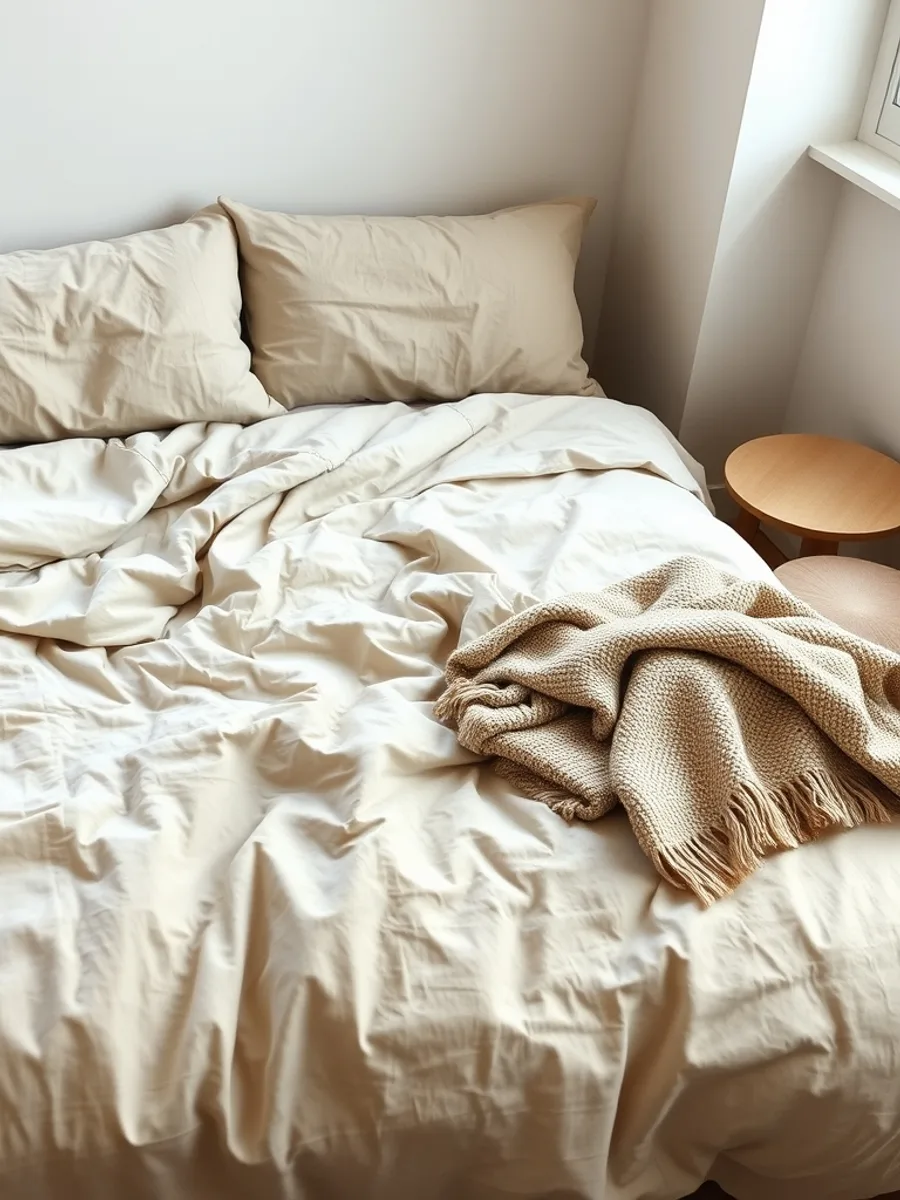
Linen bedding is sold on atmosphere: rumpled, sunlit, expensive. The information that decides whether you sleep well and whether the set survives three years is on the label, and there is less of it than the marketing implies. Weight, fiber length, and whether the fabric was washed before it was cut matter more than the word "French" on the box.
This post contains affiliate links. If you buy through them, we may earn a commission at no extra cost to you. Read our Affiliate Disclosure.
What the label is actually telling you
"100% linen" means flax, nothing else. "Linen blend" usually means linen mixed with cotton or rayon, which wrinkles less and costs less, but also breathes less and softens differently. A 55/45 blend can feel pleasant; it is simply a different product, and it should not be priced like pure linen.
Origin claims are weaker signals than they look. French and Belgian linen refer to where the flax was grown and spun, and the fiber is generally long and fine, but a beautiful fiber woven loosely will still pill and split. Ask about the weave, not the postcode.
"Stonewashed" and "garment washed" mean the finished fabric was tumbled with abrasives or simply washed repeatedly. Both soften the hand and reduce shrinkage, and both remove a little strength. That is a fair trade for bedding. What you want to avoid is a fabric described as soft that has never been washed at all, because it will shrink in your machine instead of the factory's.
Thread count is a cotton measurement and tells you almost nothing about linen. For linen, look for weight.
Weight decides the season
Linen is measured in grams per square meter, sometimes in ounces per square yard. The numbers are not standardized across retailers, but the bands are consistent.
Light linens around 150 to 165 GSM feel cool and airy and suit hot sleepers and summer. They also wrinkle more dramatically and wear faster at the pillow edge. Mid-weight linen around 170 to 185 GSM is the year-round choice for most bedrooms: enough body to drape, still breathable. Heavy linen above 190 GSM feels substantial and cool to the touch, holds a crisp fold, and takes longer to dry. It is the better choice for a cold room or for anyone who wants the bedding to outlast the trend.
Judging weight without touching it
If the listing gives no GSM, look for ounces per square yard, or for the fabric weight in the description. Failing that, read the stated care instructions and the customer photos: heavy linen hangs in stiff folds and shows fewer wrinkles in the same light. A set that looks papery in photographs is probably light, whatever the copy says.
Fit, shrinkage, and the pocket problem
Pre-washed linen has already done most of its shrinking. Unwashed linen can lose 3 to 8 percent of its length in the first few washes, which is the difference between a duvet cover that fits and one that leaves the insert exposed at the foot.
Measure the mattress depth before ordering. Most mattresses are 10 to 14 inches deep, and deep-pocket sheets are usually cut for 16 to 18 inches. A deep-pocket sheet on a shallow mattress will bunch; a standard sheet on a deep mattress will pop off the corners by morning.
Check the flat sheet and duvet dimensions as numbers rather than labels. "Queen" is not a standard across brands, and linen duvet covers often run small because the fabric has been washed. Compare the listed width and length against your duvet insert, then add an inch or two of ease.
What each price tier buys
Price in linen buys fiber length and consistency. Entry-level sets are often blends or lighter weights with a visibly irregular weave; they can be perfectly comfortable and will show wear within a couple of years. Mid-tier sets are usually 100% linen around 170 GSM, pre-washed, with straight seams and generous hems. The top tier pays for long-staple fiber, tighter and more even weaving, and certifications such as OEKO-TEX, which covers harmful substances rather than performance. None of these guarantees a better night's sleep, but they do change how the bedding ages.
| Product | Best for | What to know |
|---|---|---|
| Lightweight linen sheet set | Hot sleepers and summer | Around 150–165 GSM; wrinkles heavily, wears at the pillow edge |
| Mid-weight stonewashed set | Year-round use in most bedrooms | The safest default; check whether it was pre-washed |
| Heavyweight linen duvet cover | Cold rooms and crisp folds | Above 190 GSM; slow to dry, needs a large machine |
| Linen-cotton blend set | Anyone who dislikes ironing | Less breathable, softer initial hand, usually cheaper |
| Deep-pocket linen sheets | Mattresses over 14 inches | Confirm pocket depth and pre-washing before ordering |
For a starting point, a mid-weight stonewashed linen sheet set is the least risky purchase, and a heavyweight linen duvet cover suits a cool bedroom. If you want the look without the ironing, a linen-cotton blend set softens faster, and deep-pocket linen sheets are worth checking if your mattress is thick.
Care that keeps it soft
Wash linen in cool or warm water on a gentle cycle with a mild detergent, and skip fabric softener entirely: it coats the fiber and reduces absorbency. Tumble dry on low until just damp, then put the bedding back on the bed or hang it. High heat is what makes linen brittle and shiny at the seams.
Linen improves for the first two or three years of washing, then plateaus. If you want the full routine, including how to treat oil stains and why linen should never be bleached, our guide to caring for linen and cotton covers it. For the room around the bed, neutral bedroom styling explains why oatmeal and chalk linen photograph better than bright white.
FAQ
Does linen bedding get softer over time?
Yes, and that is most of the reason people pay for it. Each wash relaxes the fiber and loosens the weave slightly. The softening is fastest in the first ten washes; after that the fabric settles into its final hand.
Is linen good for hot sleepers?
Generally, yes. Flax fiber wicks moisture and conducts heat away faster than cotton, and it does not trap air the way a tight percale weave can. A light or mid-weight linen in summer is cooler than most cotton sets, though a heavy linen can feel warm.
How much does linen shrink?
Unwashed linen typically shrinks 3 to 8 percent in length after the first few washes. Pre-washed or garment-washed linen has already shrunk and should stay close to its listed size. Always check whether the set is pre-washed before you judge the dimensions.