How to Choose a Coffee Table That Fits Your Room
Most coffee table mistakes are dimensional, not aesthetic. Measure the walkway, match the sofa, then pick a material you can actually maintain.
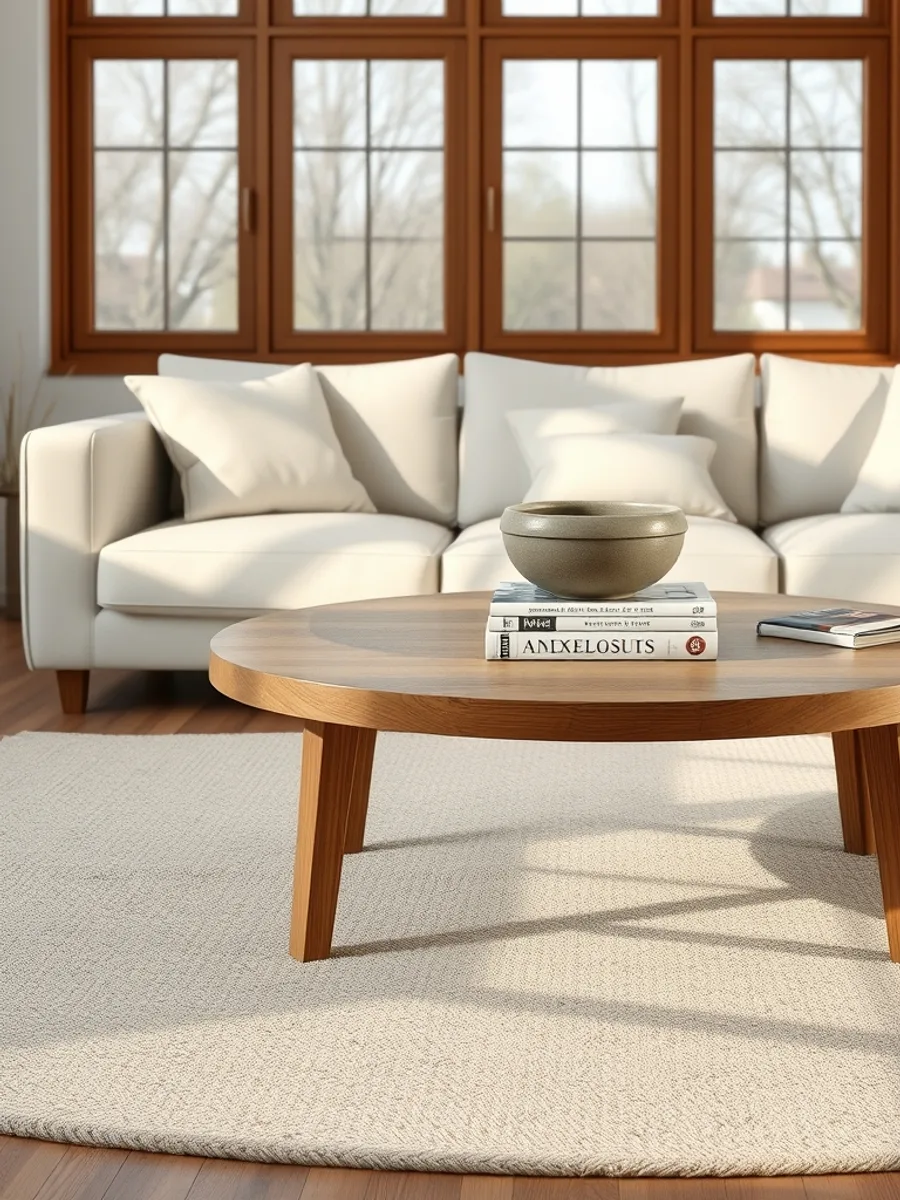
A coffee table is the piece of furniture you walk around a hundred times a week, and most buying mistakes are dimensional rather than aesthetic. Choose by photograph and you will spend a year banging your shin on a corner. Choose by clearance, height, and material, and the table will feel like it was always there.
This post contains affiliate links. If you buy through them, we may earn a commission at no extra cost to you. Read our Affiliate Disclosure.
Start with the walkway, not the table
The first number that matters is not the table's width. It is the gap between the table and everything else. Allow 14 to 18 inches between the sofa and the table edge — enough to stand up without pushing the table, close enough to reach a mug. Main routes through the room need 30 to 36 inches of clear floor. Secondary routes, like the path to a window, can survive on 24.
In a small room these numbers compete, which is why an oval or round table often wins: it removes corners from the walking line and lets people cut past. Our guide to a small living room layout covers the sequence of clearances in more detail, but the principle is simple. Floor space is the budget. Spend it on circulation before you spend it on surface area.
Match the table to the sofa, not the room
Length is roughly two-thirds of the sofa's length. A 84-inch sofa wants a table between 48 and 56 inches. Shorter feels like a side table that drifted; longer turns the seating into a corridor you cannot cross.
Height should land within one or two inches of the sofa seat. Most seats sit 17 to 19 inches off the floor, so a 16-to-18-inch table works for most people. Low sofas with deep seats often suit 14 inches. If the table is much lower, you will lean forward to put down a glass; much higher and it blocks the sightline to the room.
Depth between 18 and 24 inches is comfortable for a 36-inch-deep sofa. Deeper tables collect objects at the far edge that nobody can reach.
The tape test
Cut a cardboard template to the dimensions you are considering and leave it on the floor for three days. Walk around it in the dark. Sit down and stand up. You will learn more from that than from any showroom visit, because showrooms are built with generous aisles that your living room does not have.
Shape follows the traffic
Rectangular tables suit long sofas and rooms where the seating runs parallel to a wall. They also give you the most usable surface per square foot. Round tables soften a square room, survive tight circulation, and have no corner to catch a knee; the trade-off is that a round top wastes depth at the edges for anyone sitting at the end of a long sofa. Oval splits the difference and reads more formal.
Nesting tables are worth considering if the room doubles as a play space or a yoga spot. Two small tables give you flexibility that one large table cannot, though they tend to be less stable for a full dinner plate. Square tables work in square rooms and beside sectionals, where a rectangular table would fight the corner.
Material is a maintenance decision
Every material asks for something. Decide which request you will actually honor.
Solid oak or walnut. Dents and rings from cold glasses; needs coasters and an annual oil or wax. Repairable, which is the point. If you go this route, read how to clean wood furniture before the first spill, not after.
Veneer over engineered board. More stable in humidity, flatter across seasons, and usually cheaper. The risk is the edge: water that sits on a chipped edge will lift the veneer. Use a tray for drinks and it will last.
Glass. Visually light, easy to wipe, and it makes a small room feel larger. It also shows every fingerprint and every crumb on the rug beneath it. A glass top over a metal frame is a reasonable choice for renters and for rooms with heavy traffic.
Stone and travertine. Heavy, cold, and beautiful. Acidic things — wine, citrus, vinegar — etch the surface permanently. If you like to eat at the coffee table, choose a honed finish and accept the patina, or choose something else.
Painted MDF. The least expensive option and the least forgiving. Corners chip, and a chipped corner cannot be repaired invisibly.
What the table has to hold
Think about the table's second job. If it holds a lamp, check that the cord can reach an outlet without crossing the walkway, and consider the layering advice in our lighting basics guide. If it holds books and a tray, a lower shelf doubles the capacity without adding footprint. If it holds remote controls and children's art supplies, look for a drawer or a lift-top, and measure the clearance behind the sofa before assuming a drawer will open.
| Product | Best for | What to know |
|---|---|---|
| Round oak table, 36 inches | Small rooms and tight walkways | No corners to catch a knee; check the top against your sofa length |
| Rectangular walnut table with shelf | Long sofas and book storage | Heavier than it looks; the shelf needs 10 inches of clearance below |
| Glass-top table with metal frame | Renters and visually small rooms | Shows dust and fingerprints; wipe with a microfibre cloth weekly |
| Oval stone table | Formal seating and large rooms | Etches with wine and citrus; use coasters every time |
| Nesting pair of small tables | Flexible rooms and play spaces | Less stable for plates; check the weight rating of each top |
For most living rooms, a round oak coffee table around 36 inches solves the circulation problem, while a rectangular walnut table with a lower shelf suits a long sofa. If the room is dark, a glass-top table with a metal frame keeps the floor visible, and a nesting pair of small tables is the practical answer for a room that changes use through the day.
FAQ
How far should a coffee table sit from the sofa?
Between 14 and 18 inches from the sofa's front edge. Closer than 12 inches and getting up becomes awkward; further than 20 and you will lean forward to reach a drink, which is how glasses end up on the floor.
What size coffee table works with a three-seat sofa?
A three-seat sofa is usually 78 to 84 inches long, so look for a table 48 to 56 inches long and 20 to 24 inches deep. If the room cannot spare that footprint, one or two smaller tables will serve better than an undersized long one.
Is a glass coffee table practical with young children?
It is manageable if the glass is tempered and the edges are polished, but it will show fingerprints and toys beneath it constantly. Many families prefer a round wood table with softened edges for the toddler years and switch to glass later.