Keeping Patio Furniture Looking Good Year-Round
A short seasonal routine for teak, aluminum, wicker, and fabric outdoor furniture, including what to clean with and when a cover does more harm than good.
Outdoor furniture rarely fails in a dramatic way. It goes slowly: a joint that holds water, a finish that chalks in the sun, a cushion folded away damp in September and unfolded in May with a smell you cannot place. The fix is not a big annual project but a short routine, repeated at the right moments, that keeps the materials doing what they were bought to do.
This post contains affiliate links. If you buy through them, we may earn a commission at no extra cost to you. Read our Affiliate Disclosure.
Most of the work is knowing what you own. Teak, powder-coated aluminum, resin wicker, and solution-dyed fabric each want different treatment, and the wrong product can do real damage — an oil on painted metal, a pressure washer on woven resin, a plastic tarp over a wooden table.
Know the material before you touch it
Solid teak and other oily hardwoods can be left to weather to a soft silver, which is a finish, not a failure. If you prefer the honey tone, clean the surface and apply a dedicated hardwood oil once a year, in dry weather, wiping off the excess so it does not sit tacky. Painted or powder-coated aluminum needs nothing but mild soap and water; the enemy is a chipped edge, because that is where corrosion starts.
Resin wicker and woven polymer are the easiest to live with and the easiest to ruin. A pressure washer forces water into the weave and can lift the finish, so use a soft brush and a hose. Fabric slings and cushions should be cleaned with a mild solution and dried flat in the sun before they are stored; folded damp, they mildew, and mildew stains are permanent on most outdoor fabrics.
Metal frames with threaded fasteners work loose over a season of being dragged across paving. A ten-minute check with the right hex key or screwdriver in spring prevents most wobbles.
The routine that actually gets done
The version that survives a busy household is short and tied to things you already do. Once a month in the season, sweep or blow off the furniture, wash it with mild soap and water, rinse, and let it dry in the sun rather than under a cover. Wipe down table tops after meals rather than waiting for a buildup, and tip chairs to check that water is not standing in the feet.
Twice a year, tighten fasteners, check for splinters or chipped paint, and look at the joints on wooden pieces for hairline cracks that open in dry weather. Touch up chips on metal before winter, not after, because paint adheres badly to a surface that has already started to corrode.
After rain, and before guests
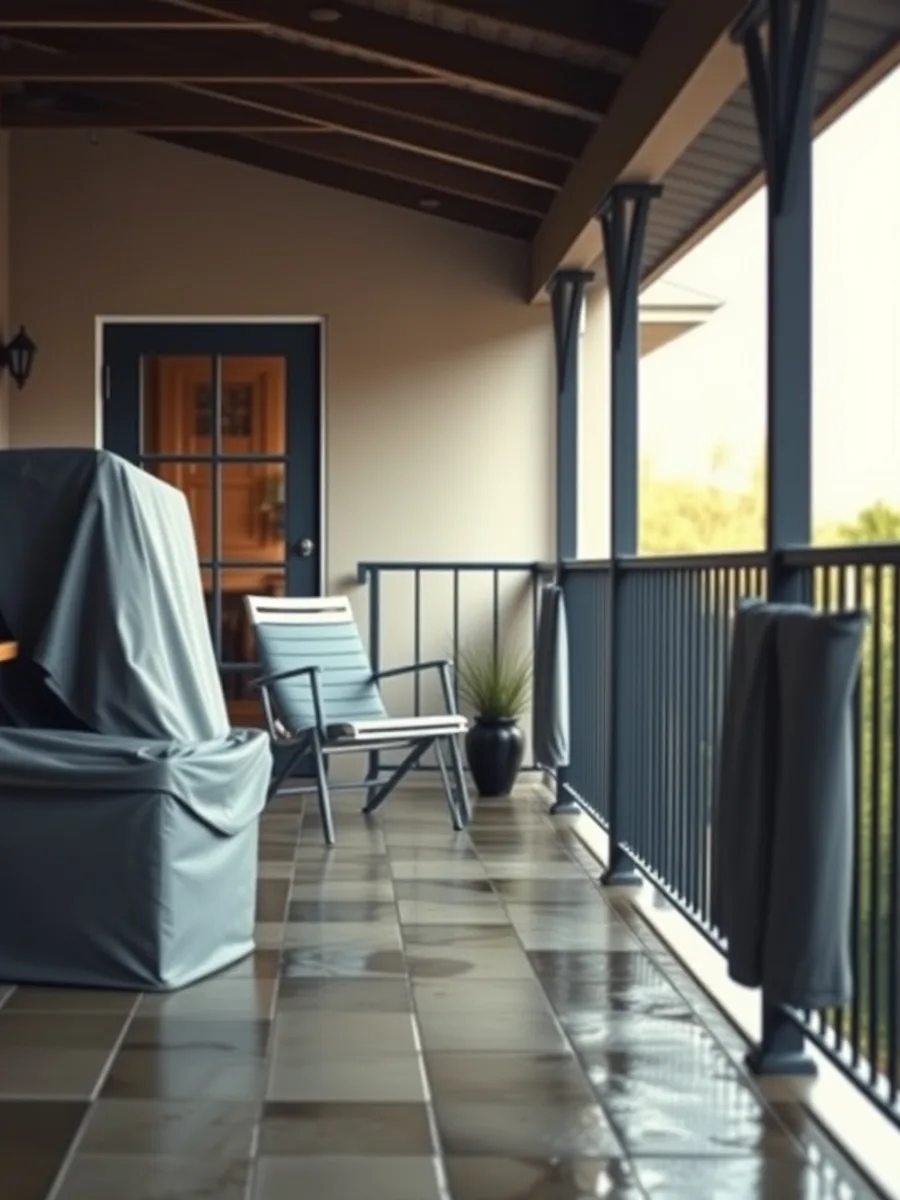
Heavy rain is a test, not a disaster. After a storm, tip water out of chair seats and table tops and leave everything to air dry in the sun. Do not stack wet chairs against each other or fold wet slings; trapped moisture between surfaces is what produces the black spotting people blame on the weather. If a table top has a small pool sitting in a hollow, mop it up — standing water is the one thing that will mark most finishes.
Care products worth keeping
The care aisle is full of products that solve problems you do not have. The table below is what we would actually keep on hand for a mixed-material patio.
| Product | Best for | What to know |
|---|---|---|
| Hardwood furniture oil | Teak, acacia, and other oily hardwoods | Apply thin coats in dry weather and wipe off the excess; oiled furniture can mark pale cushions |
| Outdoor furniture cover | Winter storage and long wet spells | Needs vents or a loose fit, or it traps condensation under the fabric |
| Mild outdoor furniture cleaner | Resin wicker, slings, and painted metal | Dilute it and rinse thoroughly; avoid anything with bleach on woven polymer |
| Touch-up paint for metal frames | Chipped aluminum and steel | Match the finish and apply before winter; small chips become large ones |
| Waterproof storage box | Cushions and small textiles | Check that the lid seals and that the box can drain; a sealed box left in sun can sweat |
Skip the pressure washer for anything woven, and be skeptical of "restorer" products that promise to bring back faded resin. Fading is in the pigment; nothing applied afterwards puts it back.
Covers, storage, and the end of the season
A cover is useful for winter and for long wet stretches, and harmful the rest of the time. The problem is condensation: a tight cover over furniture traps moisture underneath, and a wooden table under a sealed tarp can grow mildew in two weeks. Look for covers with vents, or accept a slightly loose fit, and never wrap furniture in plastic sheeting.
At the end of the season, clean everything before it is stored, because dirt holds moisture. Bring cushions and slings indoors or into a dry box, store them flat and unstacked if there is room, and stand chairs so water cannot collect in the seats. Wooden furniture is better under a ventilated cover or in a shed than sealed in plastic; metal can stay out if it is dry and chipped edges have been touched up.
If the annual reset is part of a broader fall to-do list, our seasonal home maintenance checklist covers the rest of the house. Cushion covers with removable cases can be washed like any heavy textile, following the notes in upholstery cleaning basics, and a lidded storage basket by the door keeps throws and cushions out of the rain between uses.
FAQ
Can I leave teak furniture outside all winter?
Yes, if water can drain away and the piece is not sitting in a puddle. Teak weathers to gray and does not need oil to survive, though oil keeps the original color. Standing water and soil contact are the real risks, not cold.
How do I stop outdoor cushions going moldy?
Dry them completely before storing, store them flat rather than folded, and keep them where air can move. A cushion that goes into a box damp will mildew regardless of how good the fabric is.
Is a pressure washer safe on patio furniture?
Only on bare concrete or stone, not on furniture. On resin wicker it forces water into the weave and can lift the finish; on wood it raises the grain and strips oil. A brush, mild soap, and a hose do the job.